Contents
- Metaphorical surrealism in the paintings of Mikhail Khokhlachev
- Jakob Emmanuel Gaisser (1825–1899), A Game of Chess
- Giulio Campi, “The Chess Game”, 1530–1532
- Gilbert Charles Stuart, “Portrait of the Misses Hetty and Mary Morris”, 1795
- José Gallegos y Arnosa, The Game of Chess
- François Brunery (1849–1903), Italy
- Francis Cotes, Portrait of William Welby and his first wife, 18th century
- Rémy-Furcy Descarsin, “Portrait of Doctor de S. Playing Chess with Death”, 1793
- Jean-Georges Vibert, Check
- Henry Siddons Mowbray, The Game of Chess, 1890
- Sir Lawrence Alma-Tadema (1836–1912)
- “Indian Game of Living Chess”, 1876
- Michael Fitzpatrick, “A Day in the Life”, 2013
Chess is widely represented in painting. Artists depicted not only players over a game but also individual pieces of chess equipment. Many factors contributed to this. Chess itself was seen as a board game, as a model of human relationships, even as a model of social hierarchy and social processes. Chess became part of the symbolism of the Middle Ages and early modern times. Quite early on, people began to analyse games from the point of view of the beauty of a combination and the elegance of the players' strategic ideas. Many of the painters who depicted the game understood it rather well, and some were professional chess players who used their paintings to promote it.
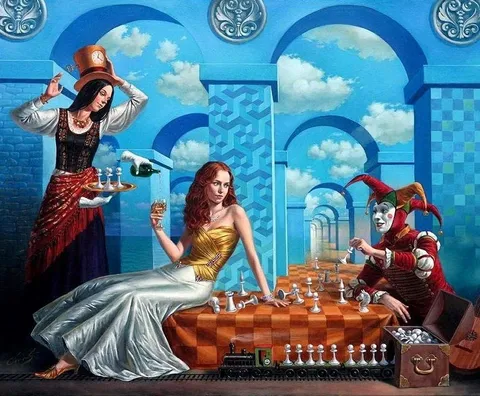
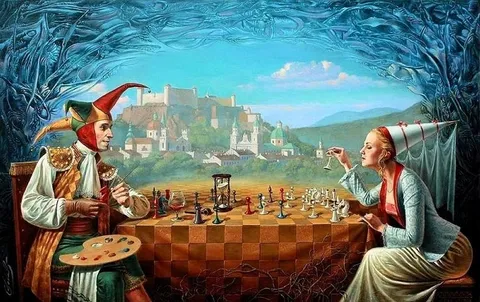
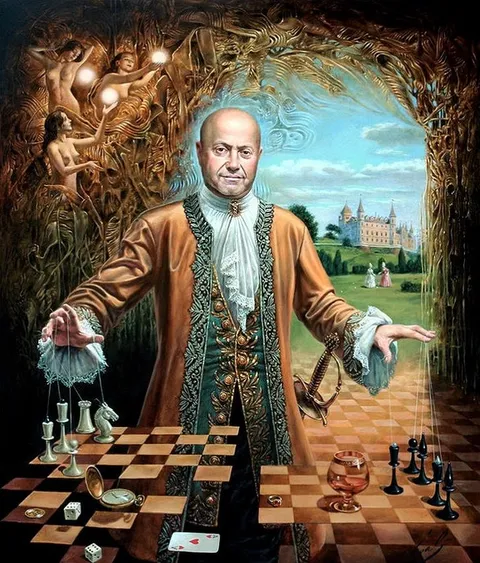
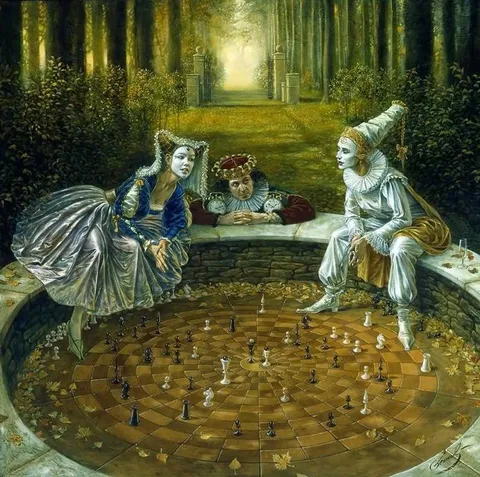
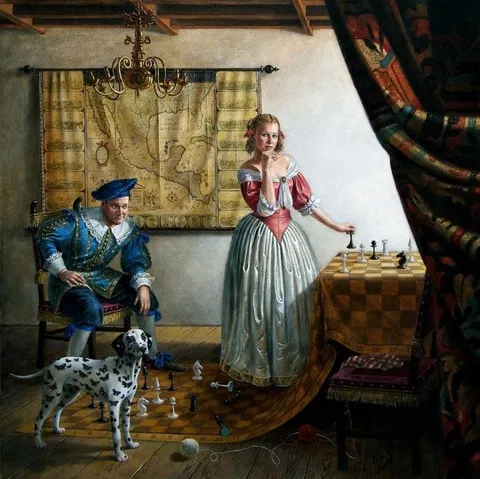
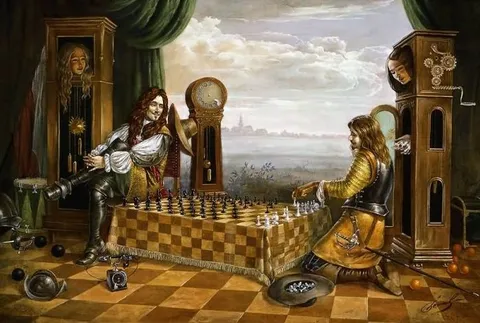
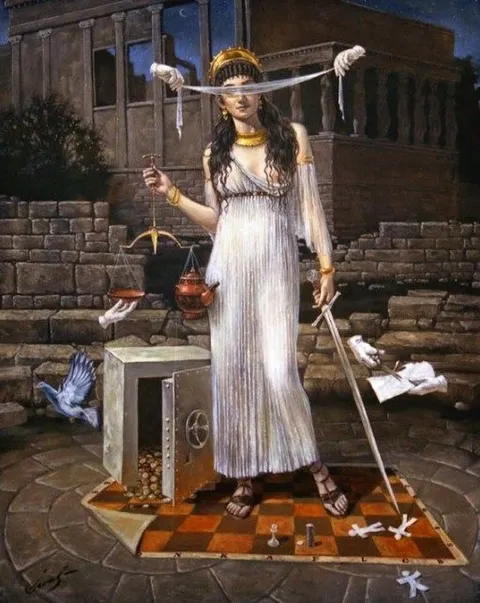
Metaphorical surrealism in the paintings of Mikhail Khokhlachev
Every painting by Mikhail Khokhlachev is a map of his journey into illusion. His works are often metaphorical and need a sharp eye to decipher their hidden hints. And every picture is a small journey into such an illusion.
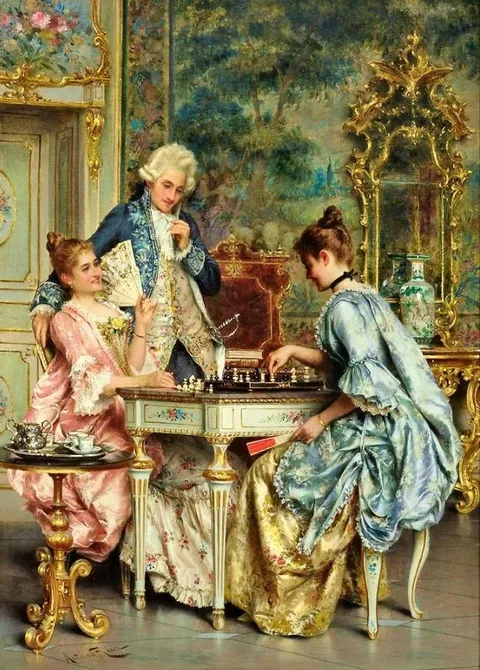
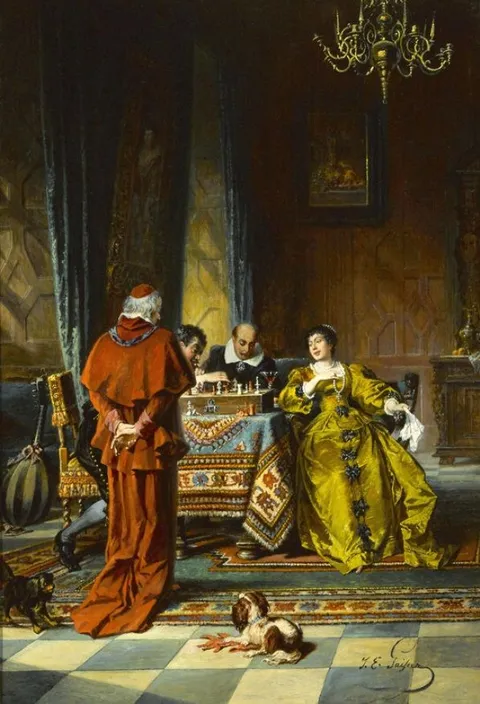
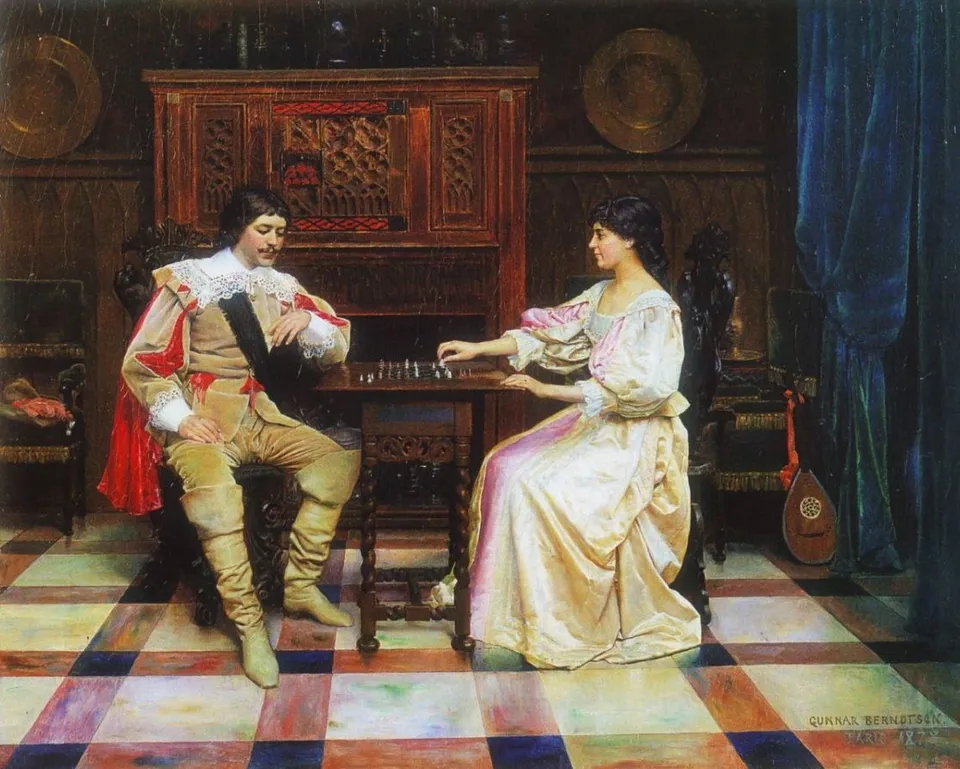
Jakob Emmanuel Gaisser (1825–1899), A Game of Chess
In the paintings of the classical masters no object is accidental; each conveys the idea contained in the picture. Since ancient times artists have placed a game of chess in their paintings, often with a wide variety of allegories.
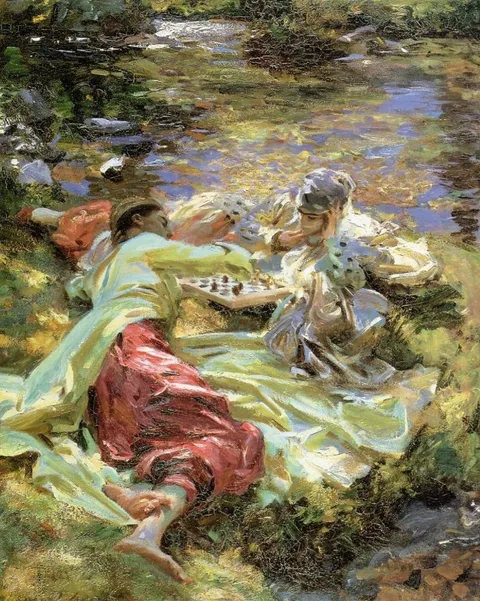
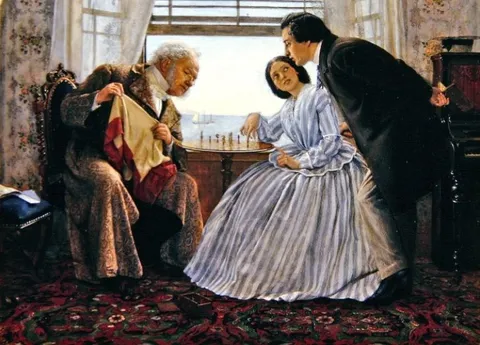
Joseph Clark (1834–1926), a British painter whose work captured the spirit of Victorian England.
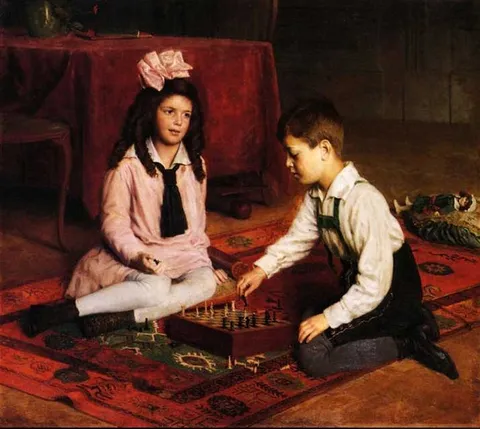
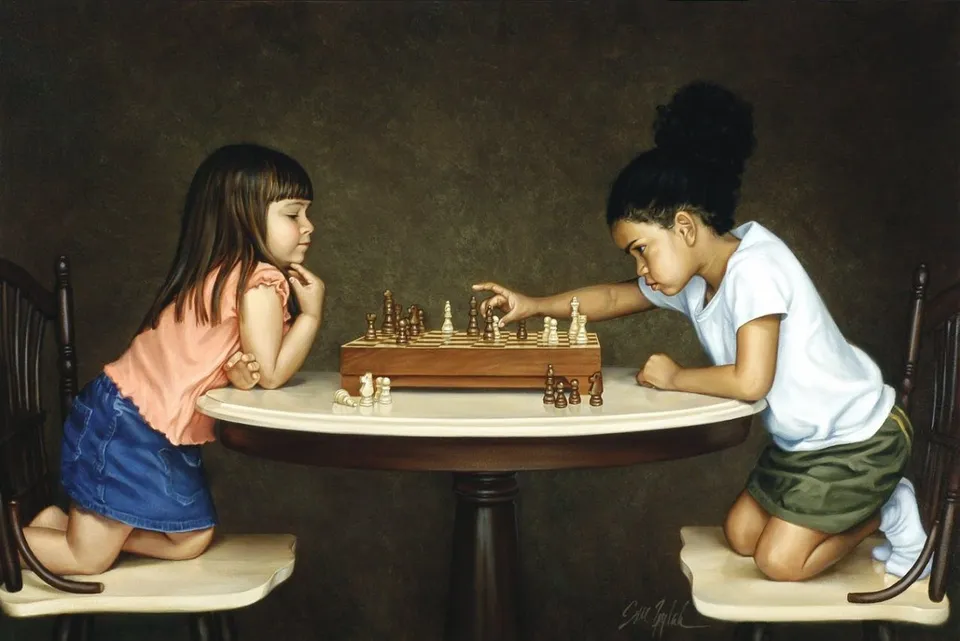
Sue Zilak, “Chess”, 2004
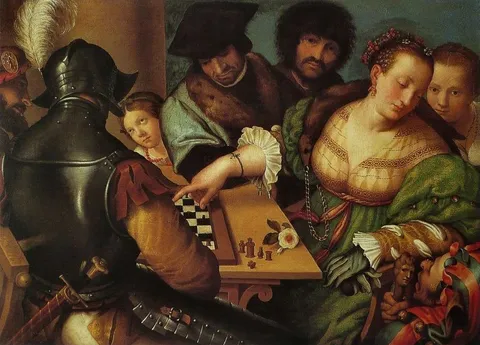
Giulio Campi, “The Chess Game”, 1530–1532
Venus makes the traditional sign of victory in chess, preserved for centuries: she points her finger at the board. At the same time she turns to the jester — he probably teased her during the game, but in the end all his jokes proved to be empty mockery. Notice, by the way, that Venus and Mars are playing not with black and white pieces but with black and red ones. We are used to seeing the chess world in black and white, but for centuries it was a world of three colours — black, white and red. Red could replace either White or Black, or the board itself could be red and white or red and black. There were no strict rules about this.
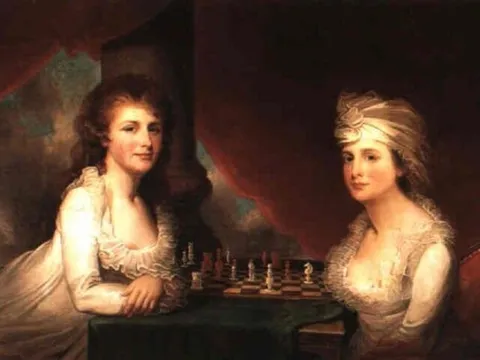
Gilbert Charles Stuart, “Portrait of the Misses Hetty and Mary Morris”, 1795
The artist used chess to show the sisters' characters: fiery (red) and calm (white). He also emphasised their temperaments through their hair and posture. The sister on the left, playing red, sits confidently taking up space, leaning on the table and giving free rein to her unruly hair. The sister on the right, mistress of the white pieces, seems to try to be smaller — she stoops slightly, hides her hands and covers her hair with a turban. The background for the sister on the left is a column, underlining the girl's self-assurance; the background for the sister on the right is a curtain, which seems to speak of her reserve and reticence.
An almost magical story is connected with the painting. The house where it hung burned down almost completely. Only one section of one wall remained untouched by the fire — and on that section the portrait of the two sisters was found unharmed.
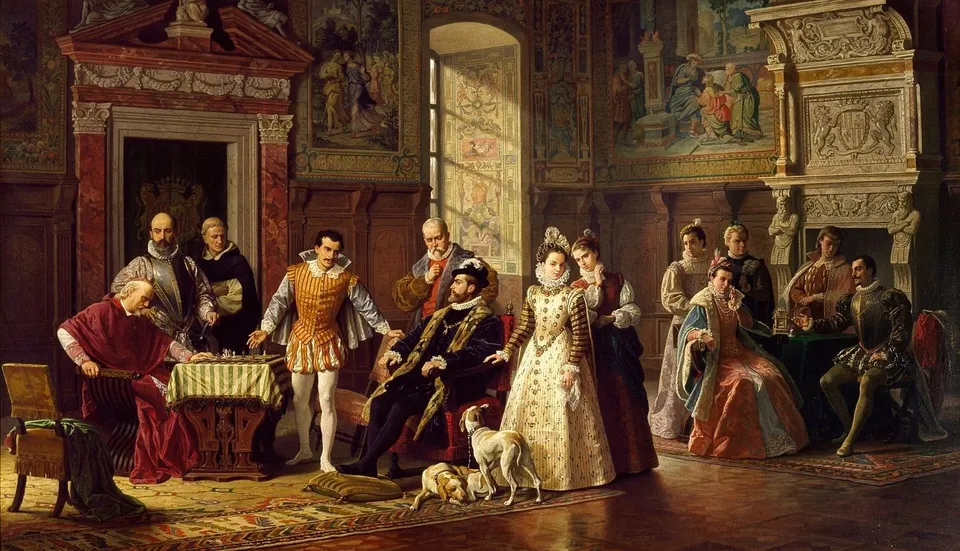
José Gallegos y Arnosa, The Game of Chess
In the Middle Ages the whole nobility of the Catholic countries played chess, and chess pieces could be found in the treasuries of churches and abbeys, even though the Church had declared the game devilish.
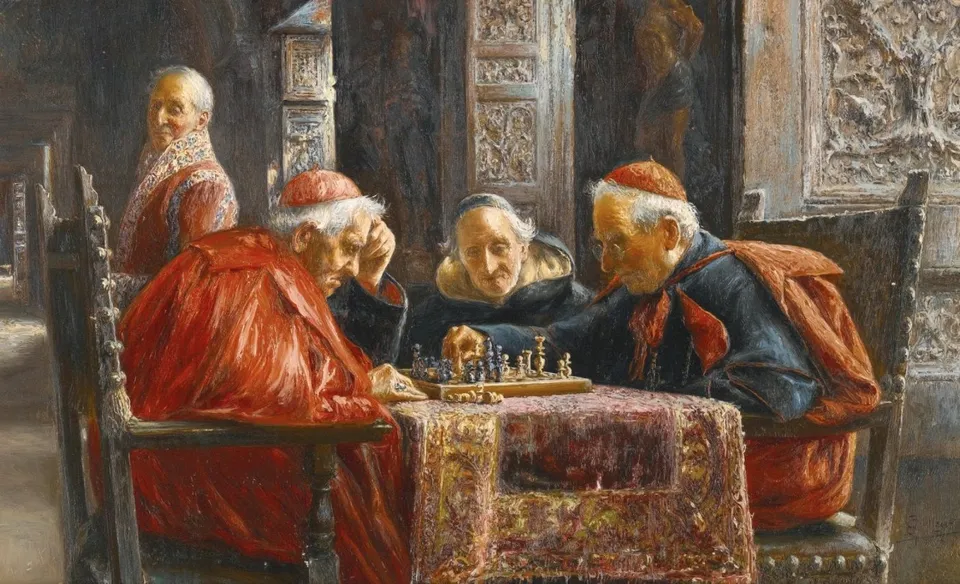
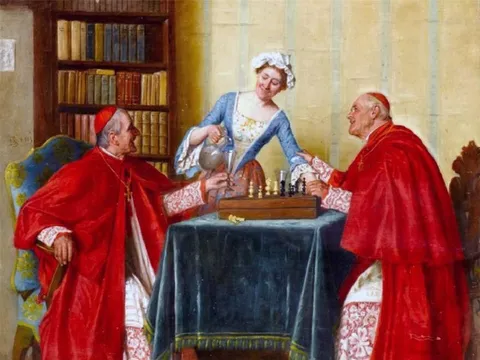
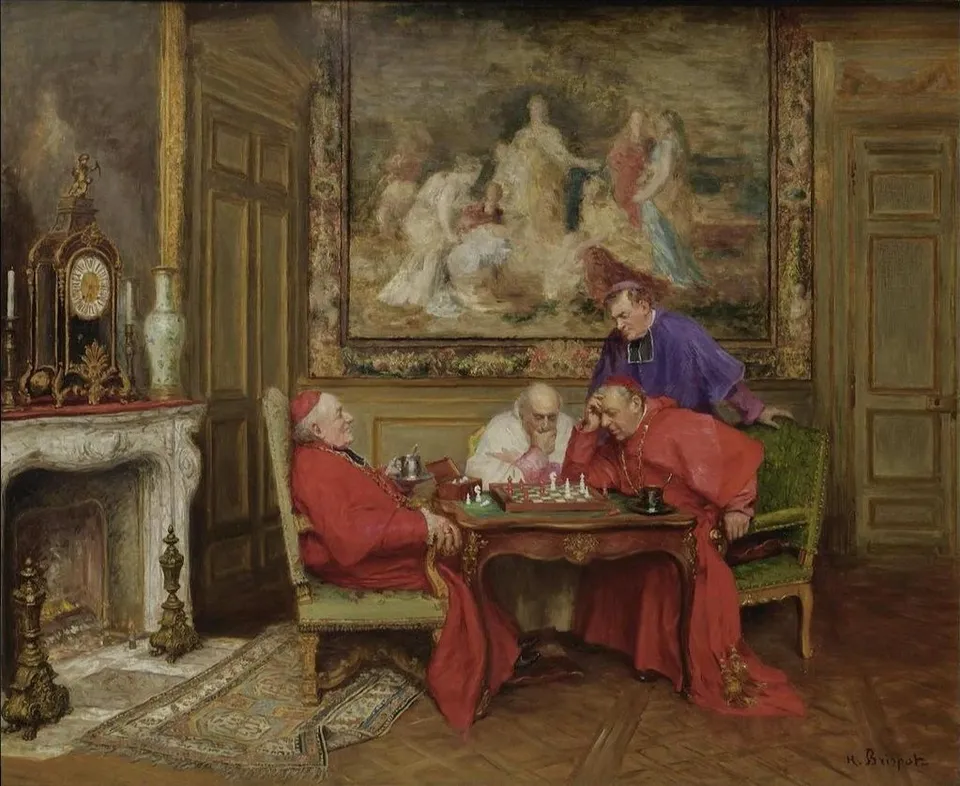
Henri Brispot (1846–1928), France. “The Cardinal's Move”
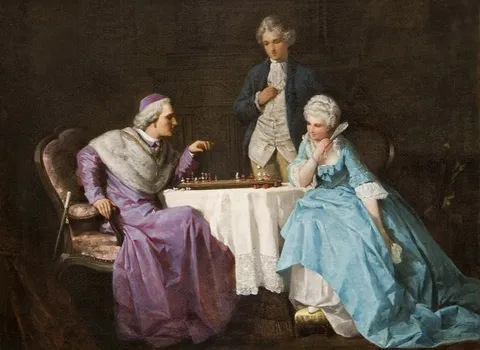
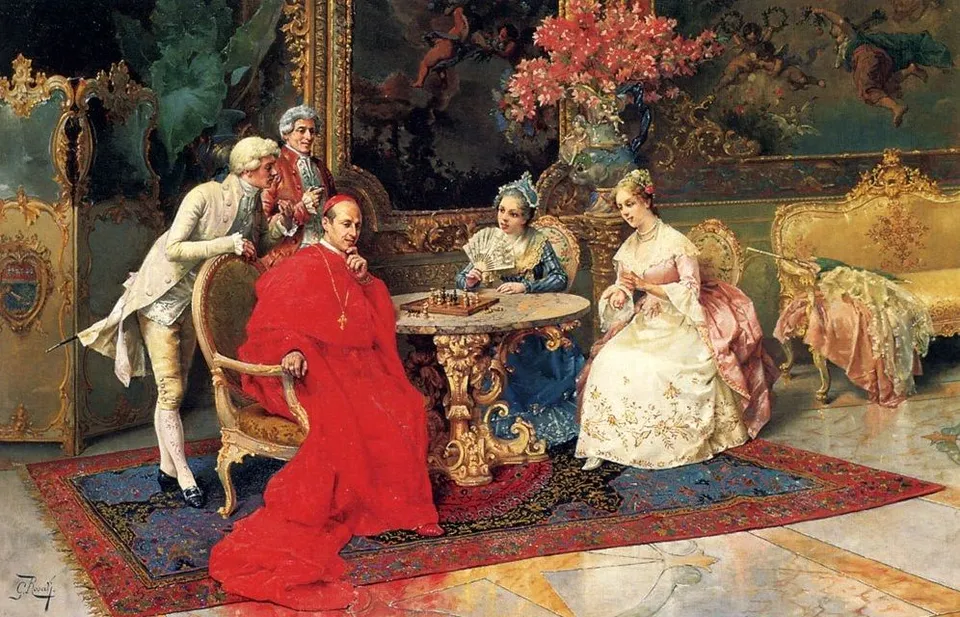
Giulio Rosati (1858–1917), Italy. “The Chess Players”
François Brunery (1849–1903), Italy
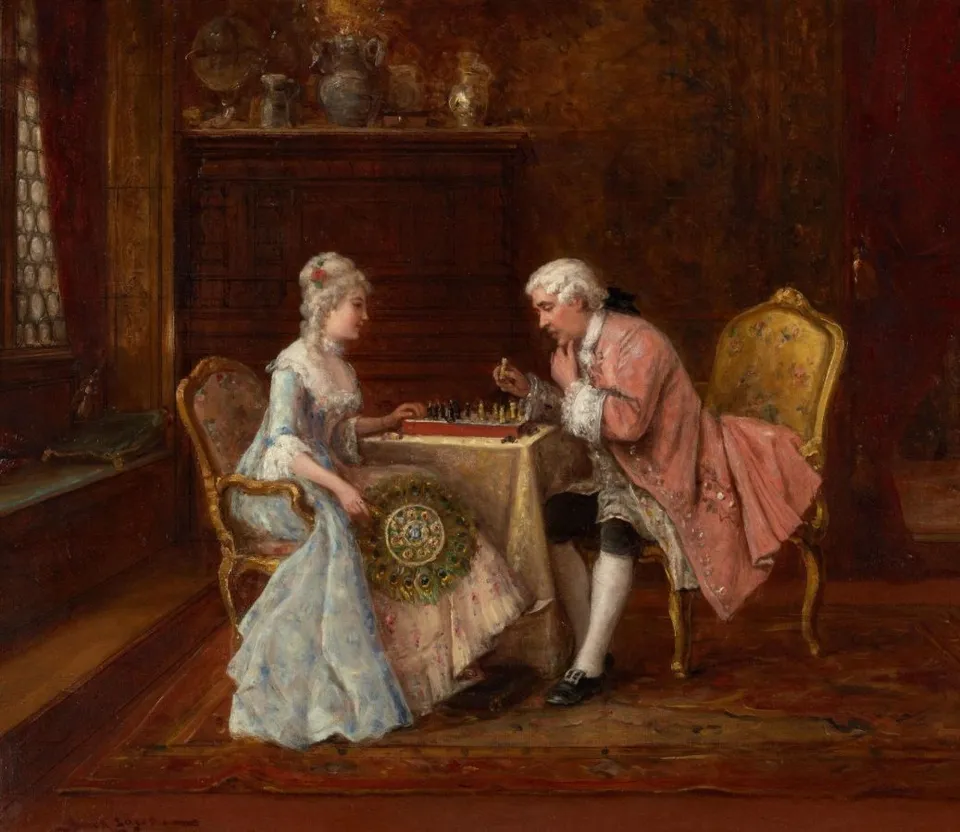
A game of chess could be an occasion for gallant conversation with a lady, or a pretext for seeking a romance.
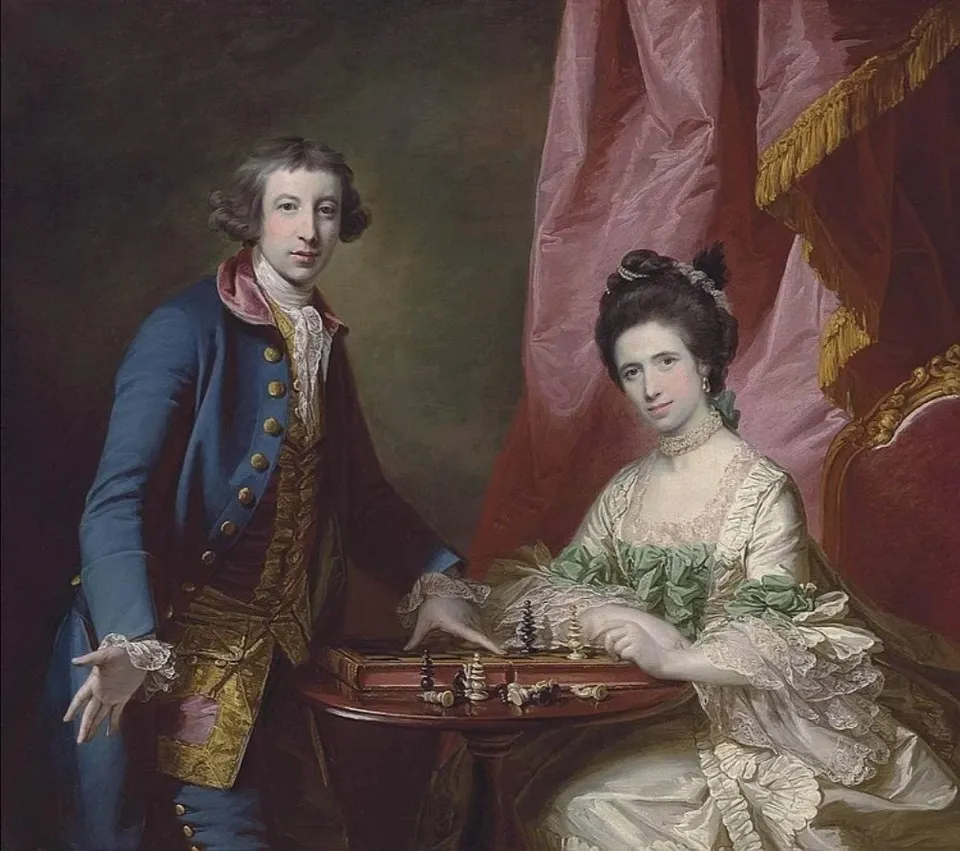
Francis Cotes, Portrait of William Welby and his first wife, 18th century
In front of the Welbys stands a chessboard. The game is a draw: only the two kings are left, and by the rules they cannot approach each other, so they cannot check or mate each other either. It is thought that the artist thus reflected the principle of equality reigning in this family. Look closely, though: although both players point at the board with the gesture of victory, the man also adds the gesture of defeat — an open palm. He is ready to give way gallantly to his beloved.
Rémy-Furcy Descarsin, “Portrait of Doctor de S. Playing Chess with Death”, 1793
A man in a dressing gown and nightcap points at the board with a smile and the gesture of the winner. Death, on the other hand, makes the gesture of the loser: an open hand turned towards the board. She has stood up as if about to leave. Why is this man shown playing against death at all? Was he badly wounded or ill? No: behind him hangs a painting of a scene from the myth of Asclepius, the legendary physician of antiquity who managed to snatch patients from the hands of Hades, the god of death himself. Even if the artist had not titled it a portrait of Doctor de S., that painting would tell us that we are looking at a physician whose successes rival those of Asclepius.
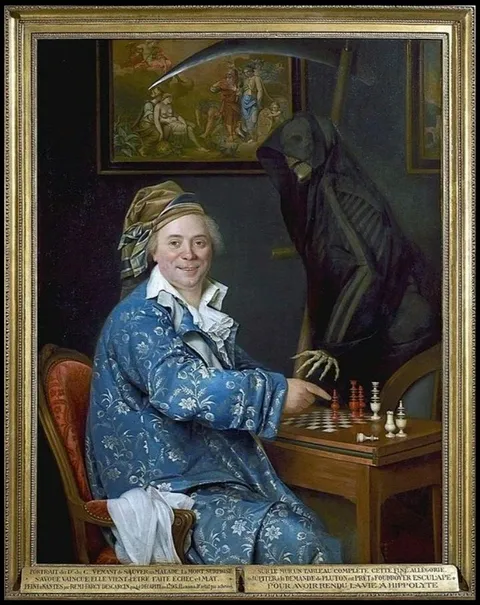
“Portrait of Doctor de S. Playing Chess with Death”
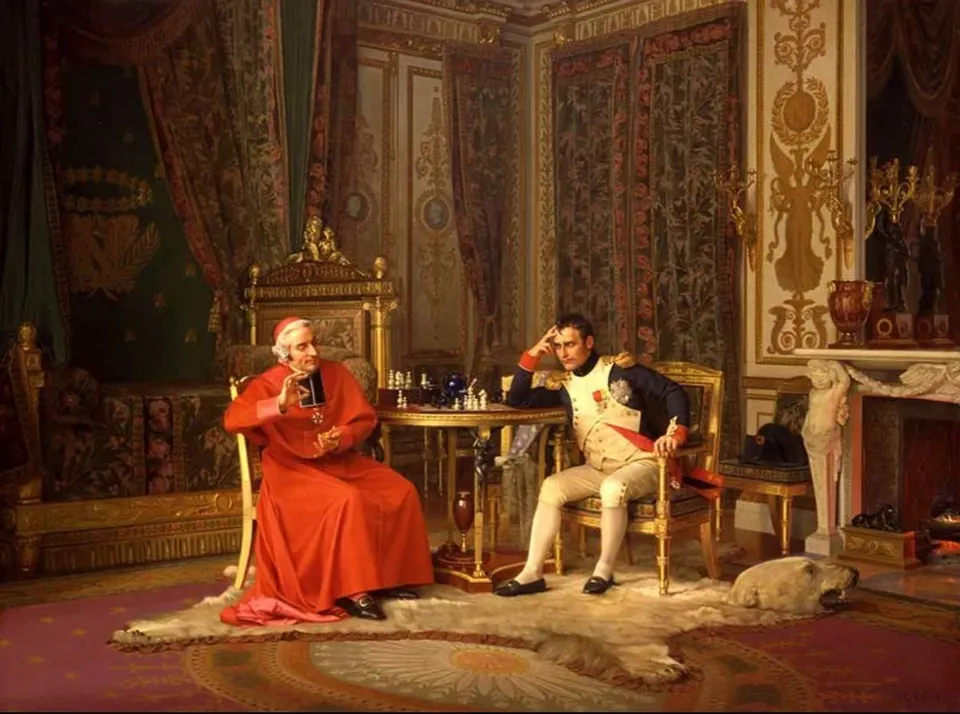
Jean-Georges Vibert, Check
In the 18th and 19th centuries politicians, clergy and philosophers were depicted playing chess. Napoleon, who adored chess, appeared in such pictures especially often, and his court painters liked to celebrate his military victories this way. Up to a certain point.
Henry Siddons Mowbray, The Game of Chess, 1890
In the 19th century the Orientalist painters joined the general fashion; their number grew along with the active colonial policy of the leading European powers. The Orientalists loved to play up the exotic side of chess — unusual pieces, the languid ease of the players. Very often the artists painted their own ideas of a fairy-tale East.
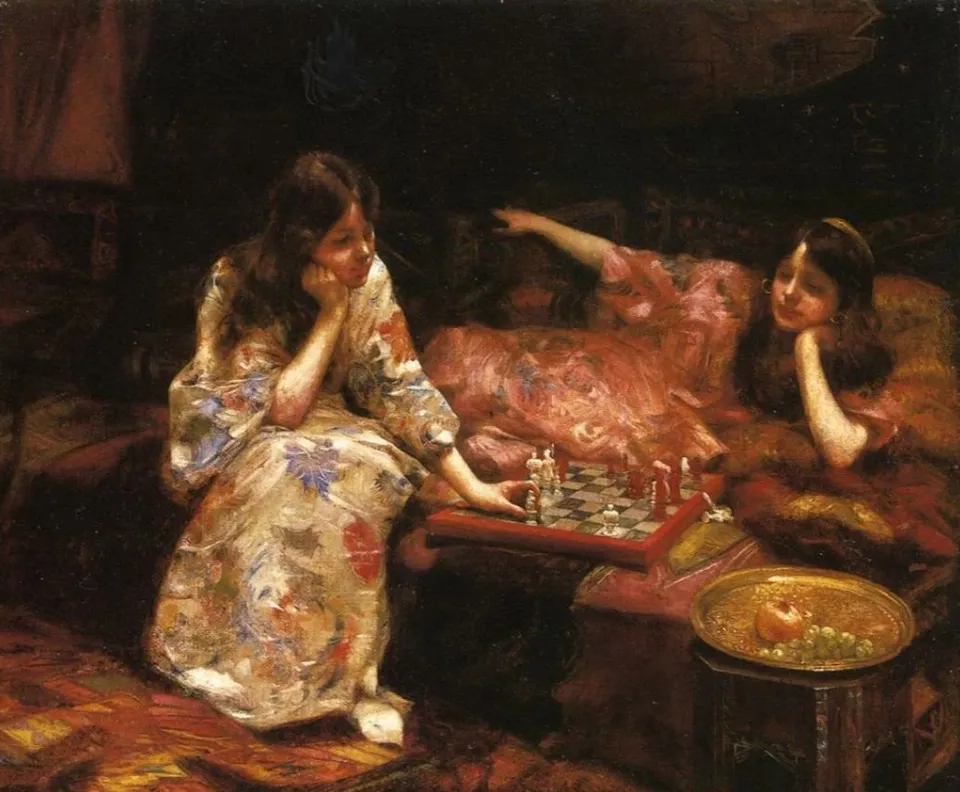
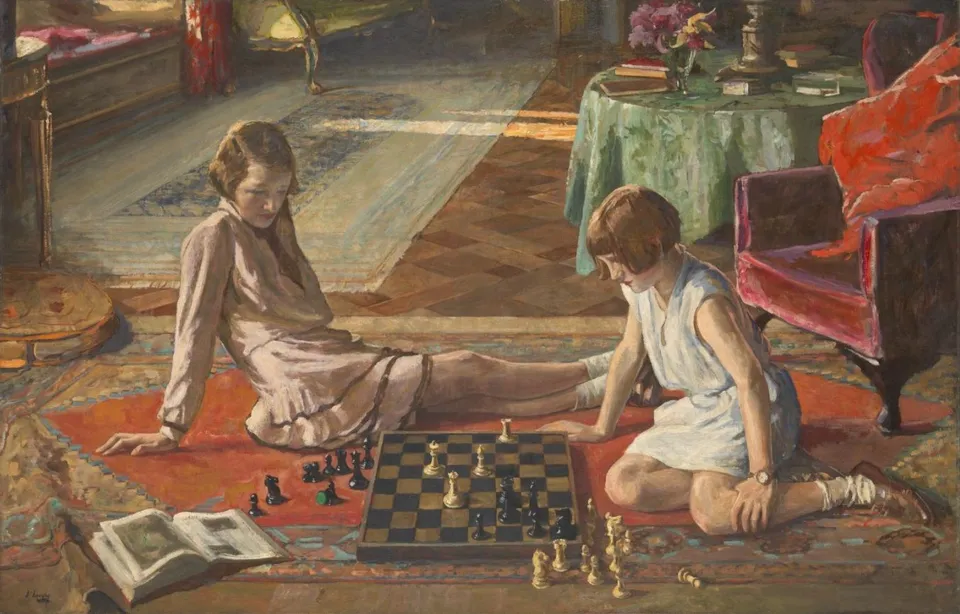
“The Chess Players”, a painting by the Irish artist John Lavery (London, 1929).
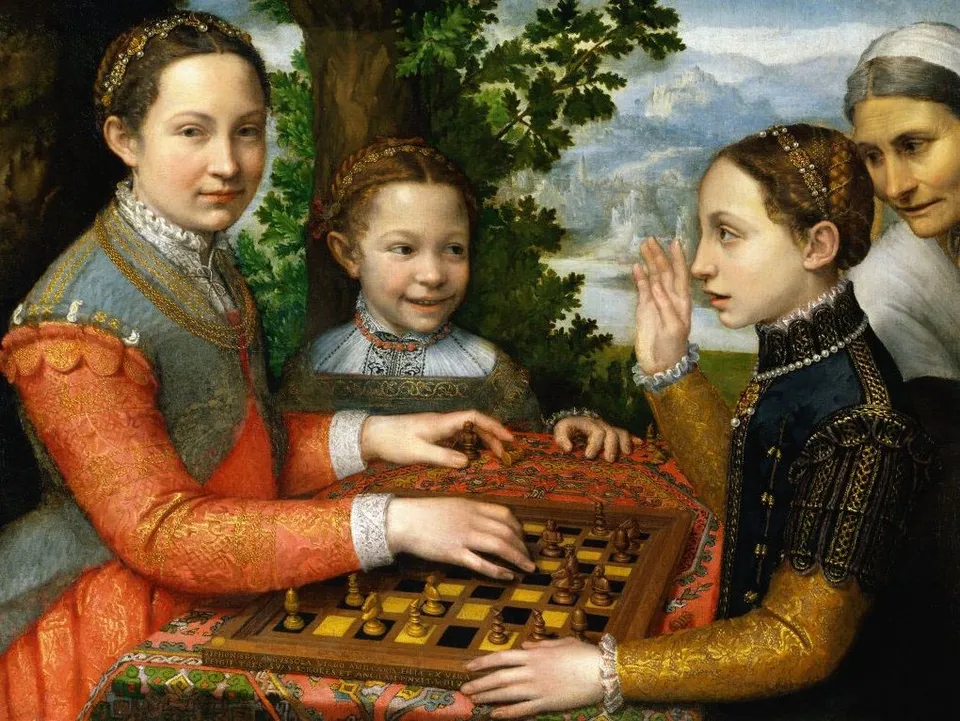
Sofonisba Anguissola (c. 1532–1625), an Italian painter and the first well-known woman artist of the Renaissance.
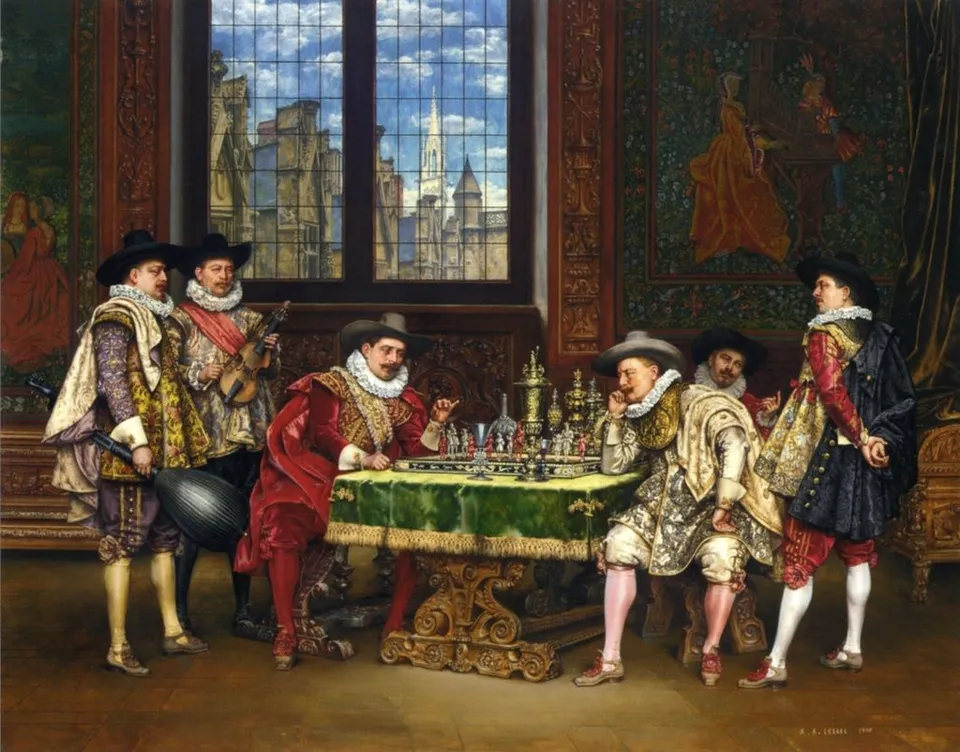
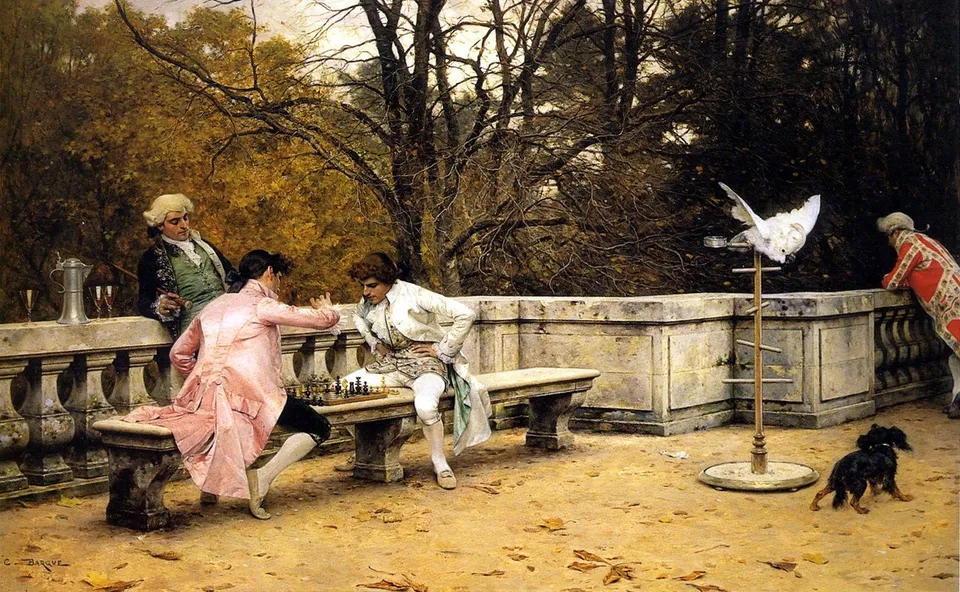
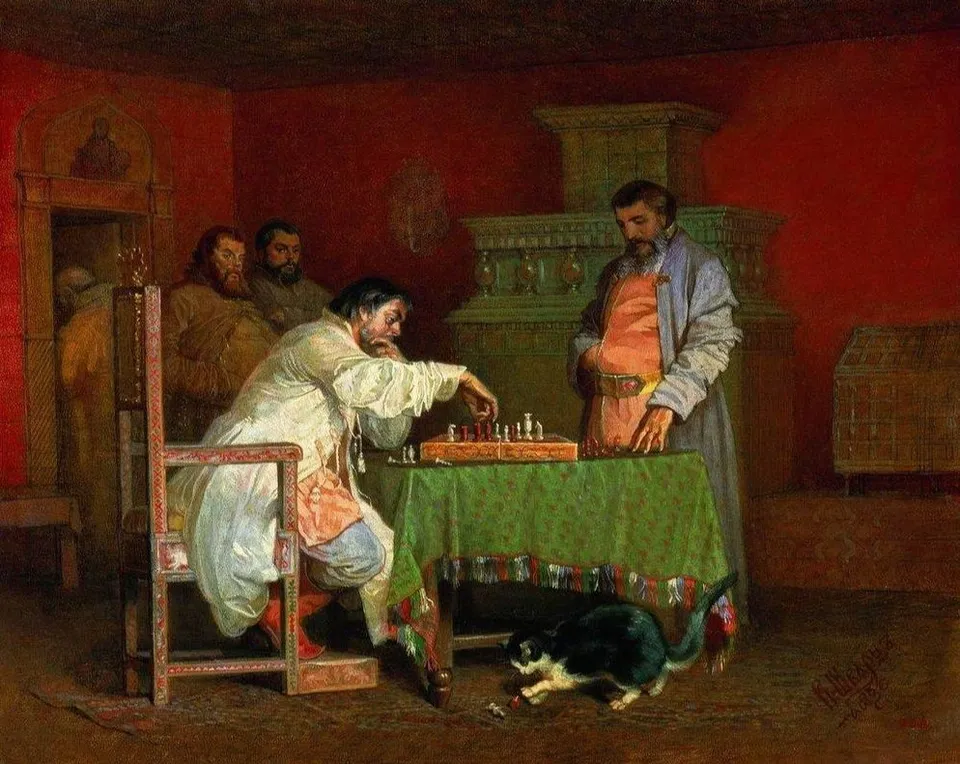
Vyacheslav Schwarz (1838–1869). A scene from the domestic life of the Russian tsars of the 16th century, “A Game of Chess”
Sir Lawrence Alma-Tadema (1836–1912)
One of the best-known British painters of the 19th century, who painted historical and mythological subjects. “Egyptian Chess Players”, 1865.
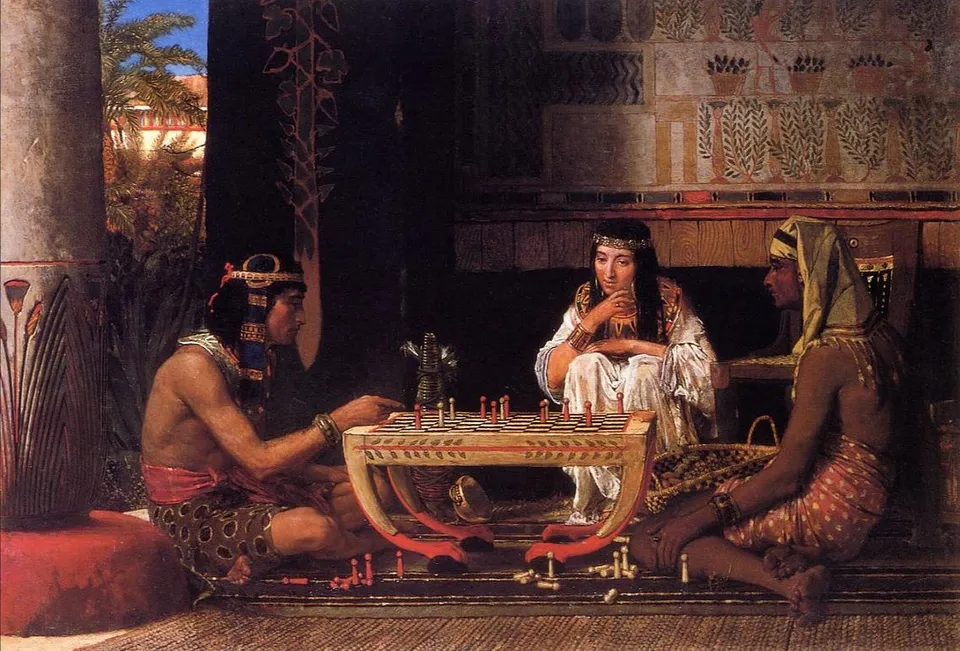
Sir Lawrence Alma-Tadema, “Egyptian Chess Players”, 1865
“Indian Game of Living Chess”, 1876
“Living chess” is a staged performance of a chess game on a large board. The first documentary evidence dates from 1408, when a performance of living chess was held at the court of Sultan Muhammad, the Moorish ruler of Granada.
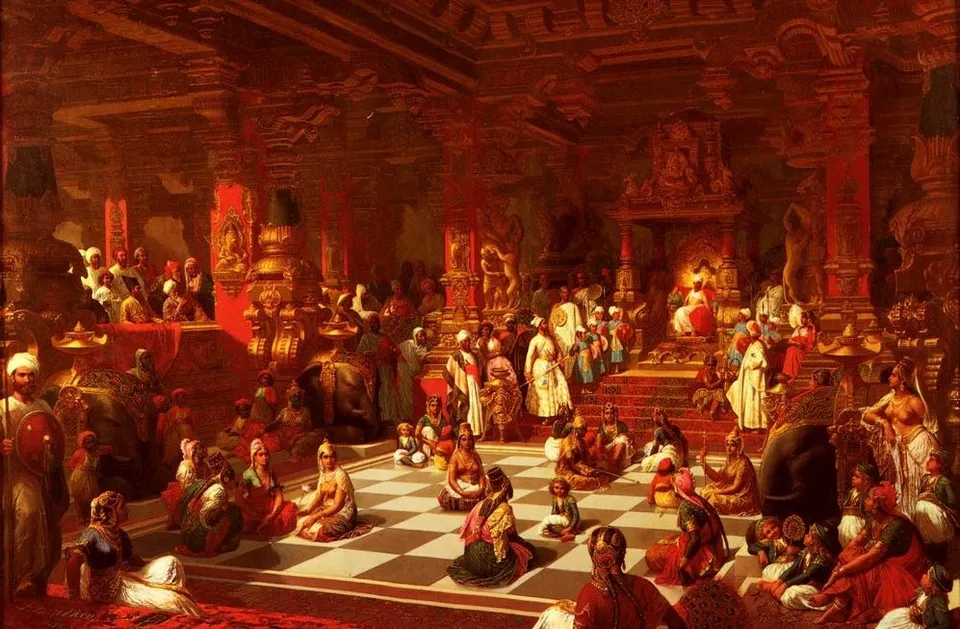
Henri Pierre Picou (1824–1895) was called the most fashionable painter of the late Second French Empire. “Indian Game of Living Chess”, 1876
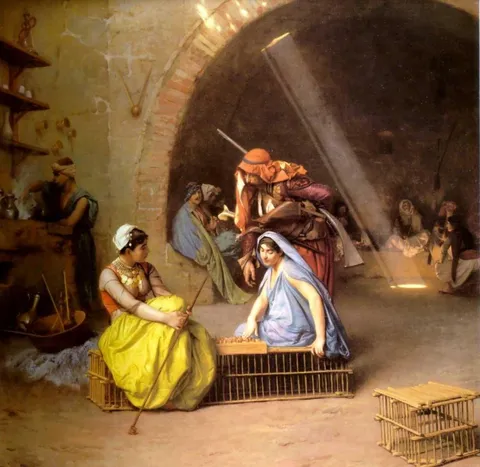
Jean-Léon Gérôme (1824–1904), a French painter and sculptor famous for pictures on very varied subjects, above all scenes from the life of the ancient world and the East.
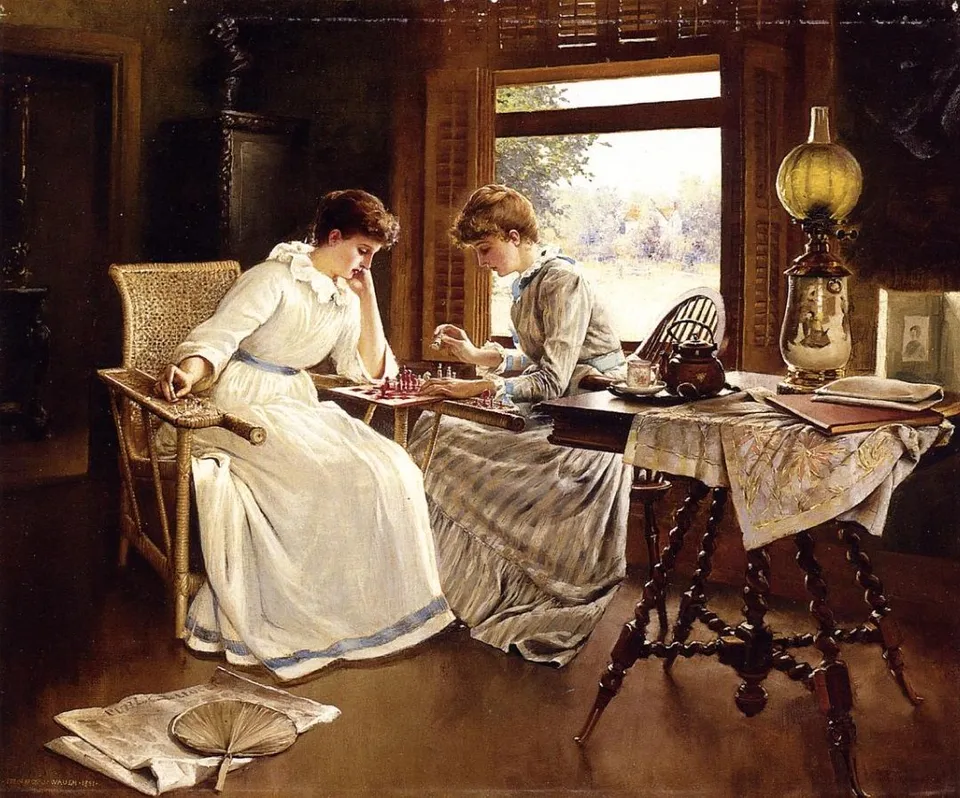
Frederick Judd Waugh (1861–1940), an American painter better known for his seascapes
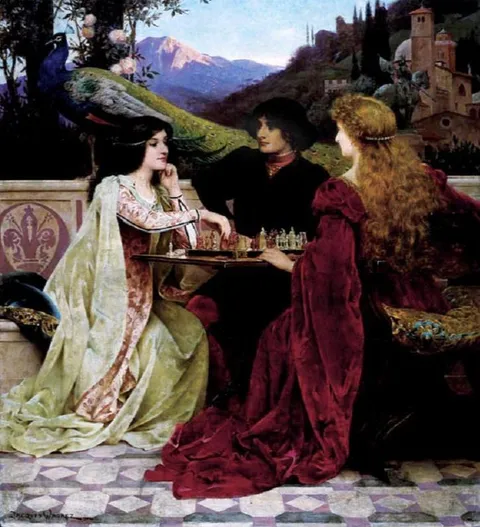
Jacques Clément Wagrez (1846–1908), French painter, portraitist, master of genre and historical costume scenes, watercolourist, illustrator and decorator. “A Game of Chess”
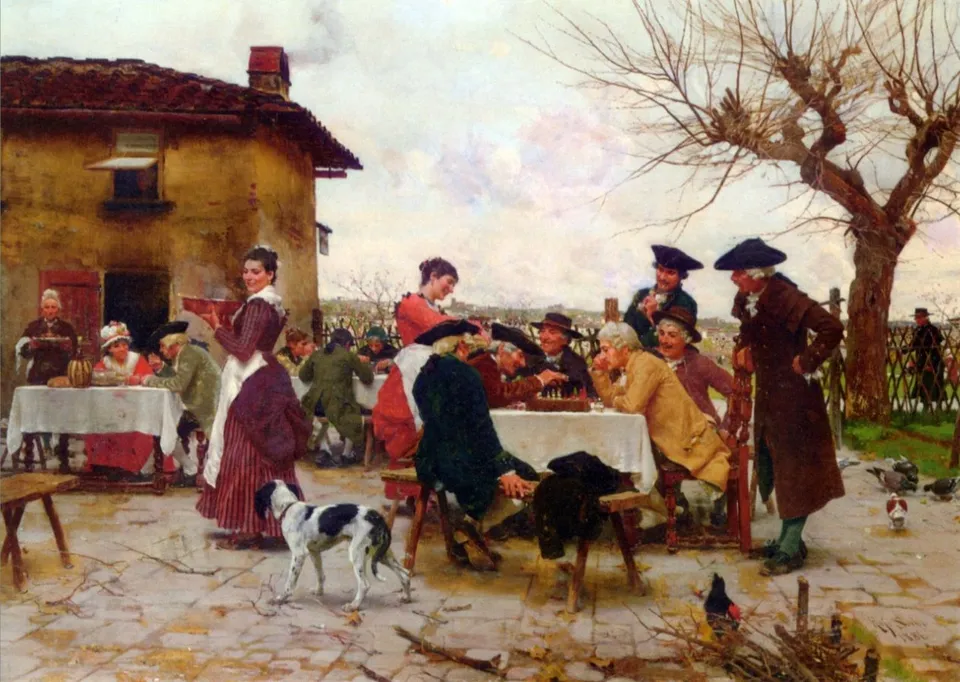
Raffaello Sorbi (1844–1931), Italy. “The Chess Players”
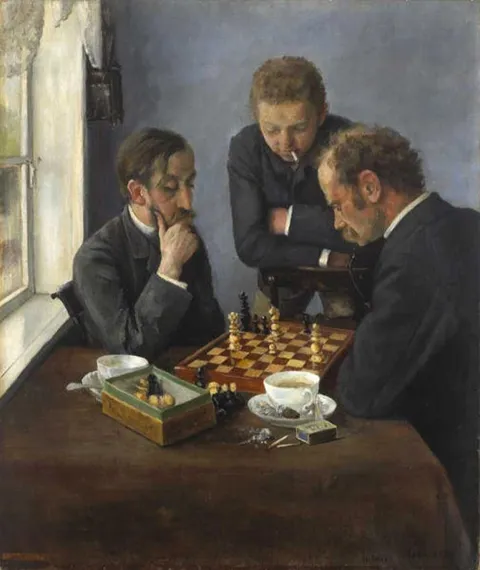
Hildur Prahl Nielsen (1855–1940), Denmark. “Mate in Three”, 1885
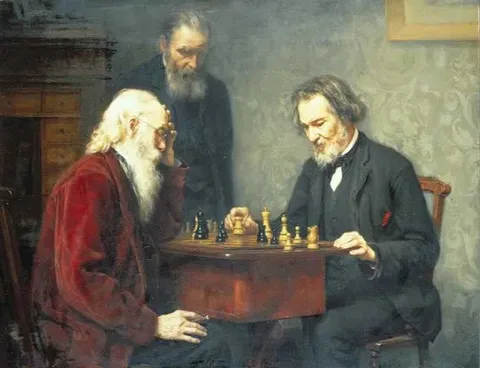
Richard Creifelds (1853–1939), USA. “Veterans”, 1886
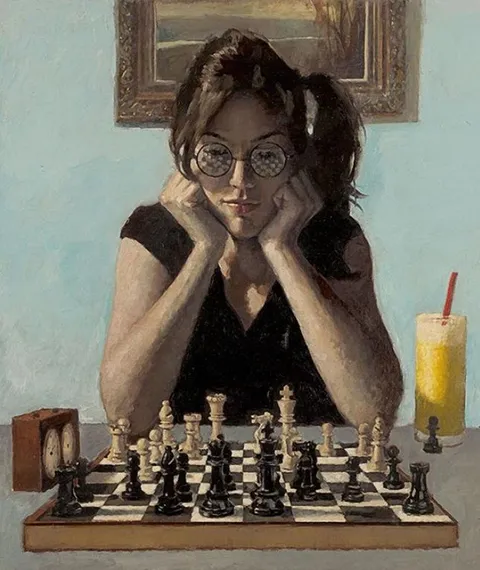
Michael Fitzpatrick, “A Day in the Life”, 2013
According to the artist, the painting was conceived as an exercise in pyramidal composition but went beyond it. A young girl is taking part in a tournament (the clock by the board tells us so). Her excitement and absorption are conveyed by an interesting visual device: the board is reflected in her glasses, as if it were in her eyes. A faint smile of pleasure plays on her lips: the game has only just begun, and everything lies ahead.
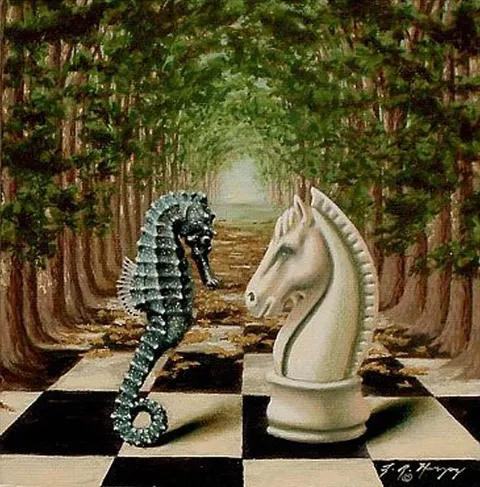
Draw. Linda R. Herzog, 2005