
Contents
Although the history of chess spans many centuries, the official men's world championship title was first contested relatively recently, in 1886. Of course, various international competitions were held before that, and their winners were recognised as the best players in the world. Such “uncrowned” champions at different times included François Philidor, Louis-Charles Mahé de La Bourdonnais, Howard Staunton and Paul Morphy. This article, however, is about the heroes who are officially recognised today as world chess champions.
Men's world champions
- Wilhelm Steinitz (1886–1894)
- Emanuel Lasker (1894–1921)
- José Raúl Capablanca (1921–1927)
- Alexander Alekhine (1927–1946)
- Max Euwe (1935–1937)
- Mikhail Botvinnik (1948–1963)
- Vasily Smyslov (1957–1958)
- Mikhail Tal (1960–1961)
- Tigran Petrosian (1963–1969)
- Boris Spassky (1969–1972)
- Robert Fischer (1972–1975)
- Anatoly Karpov (1975–1985)
- Garry Kasparov (1985–2000)
- Vladimir Kramnik (2000–2007)
- Viswanathan Anand (2007–2013)
- Magnus Carlsen (2013–2023)
- Ding Liren (2023–2024)
- Gukesh Dommaraju (since 2024)
Wilhelm Steinitz
Our list opens with Wilhelm Steinitz, born on 14 May 1836 in Prague into a large Jewish family. He later represented Austria and the USA. For a long time he was considered the strongest player in the world, winning major international events, but it was his victory in the 1886 match against Johannes Zukertort that put Steinitz into history as the first world chess champion.
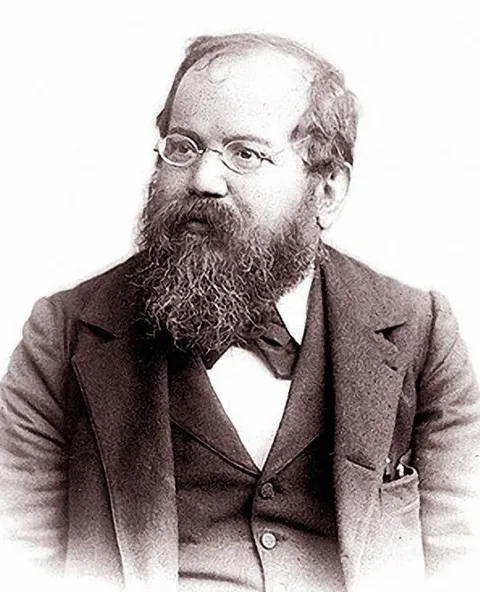
First world chess champion, 1886–1894 Wilhelm Steinitz (1836–1900). Born in Prague. He won the title in 1886 by defeating J. Zukertort in a match. Founder of the new positional school of chess, he made a great contribution to the development of the art of chess.
Wilhelm Steinitz greatly advanced the general theory of chess. He formulated the key principles of positional play, which are still relevant today. In the spirit of his time, when science was the engine of the Second Industrial Revolution, Steinitz was the first to try to introduce laws by which chess games should unfold. For example, that only the side with an advantage has the right to attack — and, moreover, is obliged to do so on pain of losing that advantage.
Emanuel Lasker
Emanuel Lasker was born on 24 December 1868 in the small town of Berlinchen in East Prussia. When he defeated the ageing Steinitz in 1894, he did not yet have outstanding tournament successes behind him, and the chess world did not see him as a deserving champion. Lasker, however, quickly proved with his victories that he held the honoured title for good reason. Moreover, for the next 26 years no one could beat him in a match for the chess crown — a record that still stands.
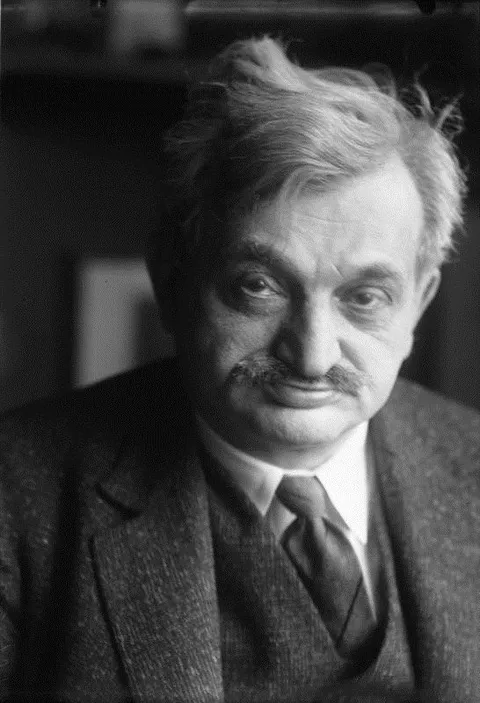
Second world chess champion, 1894–1921 Emanuel Lasker (1868–1941). Born in what is now Poland. He became world champion in 1894 after winning a match against W. Steinitz and held the chess crown for 27 years. Author of several books on chess and game theory. Doctor of mathematics and philosophy.
Lasker's chess ideas also matched the time he lived in: Einstein's theory of relativity (Lasker, by the way, knew Einstein well), Freud's psychoanalysis, new movements in painting and so on. At the beginning of the 20th century the world no longer seemed as clear as classical science wanted to present it. In his victorious matches against Steinitz and then against his follower Siegbert Tarrasch, Lasker proved that chess is much deeper and cannot be so simply sorted into neat categories, and that concrete analysis is needed not only of every move but of every opponent. Lasker was the first to pay attention to the psychology of chess, so his seemingly irrational decisions were sometimes based on a deep study of his opponent's personality.
José Raúl Capablanca
José Raúl Capablanca was born on 19 November 1888 in Havana. The Cuban laid claim to the chess crown early, but the First World War postponed his duel with Lasker. Only in 1921 was Capablanca able to challenge his rival to a match and beat him convincingly. At that time the Cuban champion was so far ahead of other players that he even earned the reputation of a “chess machine”.
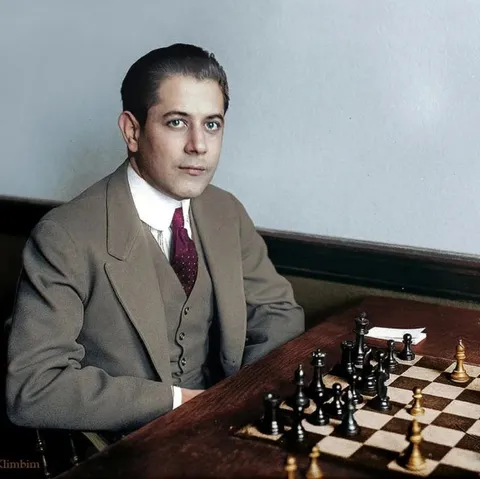
Third world chess champion, 1921–1927 José Raúl Capablanca (1888–1942). An outstanding Cuban chess player. He won the title in 1921 by defeating Em. Lasker in a match. He was distinguished by virtuoso technique; in his prime he was spoken of as a chess machine.
José Raúl Capablanca reigned on the chess throne from 1921 to 1927 — a period of booming prosperity in the USA, when it seemed that all wars were over and humanity had entered a bright new era. Just think of “The Great Gatsby” with its magnificent settings. Capablanca was a hero of that time: remarkably handsome and enormously popular with women. He loved appearing in society, all the more so as he was officially a Cuban diplomat. Yet even such a leisurely life allowed Capablanca to create brilliant masterpieces; his play was extraordinarily light and pure — the way Raphael painted and Mozart composed. Rumour had it that he never studied chess seriously, so great was his talent. That is why Capablanca's contribution to opening theory is not so large, but many of his games are textbook examples of positional play.
Alexander Alekhine
The first Russian world chess champion was born on 31 October 1892 in Moscow into a noble family. His victory over Capablanca in 1927 was a real sensation, as nobody believed the “chess machine” could be beaten — and Alekhine himself had never before beaten the Cuban in a single game. In the early 1930s, however, Alexander Alexandrovich proved to the whole world that he was a great champion: just recall his brilliant victories at San Remo and Bled and his match win over Bogoljubov. True, in 1935 Alekhine, in his own words, “lent” the title to Max Euwe, but he took it back as early as 1937.
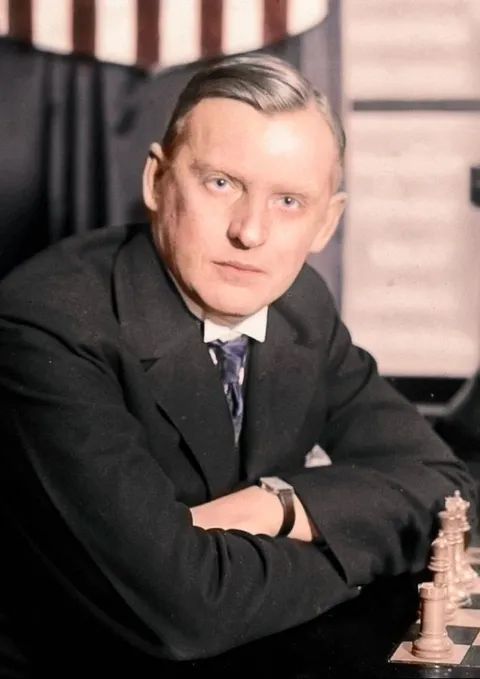
Fourth world chess champion, 1927–1946 Alexander Alekhine (1892–1946). A brilliant Russian chess player. World champion from 1927 to 1935 and from 1937 until the end of his life. The greatest master of combination, a true artist for whom chess was an art. Doctor of law. He is also remembered for his eccentric behaviour.
Alekhine's contribution to chess can hardly be overstated: he developed entire opening systems, and future champions still learn from his mating attacks and his endgame technique. He also published many books that became classics of chess literature. Alekhine's style can be linked to the twists of his fate: he went through two world wars, revolutions, economic crises and condemnation in the USSR. Perhaps that is why his games are so full of emotion, with brilliant combinations sometimes followed by terrible blunders. Alekhine is the only world champion who died undefeated.
Max Euwe
Max Euwe was born on 20 May 1901 in the small Dutch town of Watergraafsmeer. His victory over Alekhine in 1935 shocked the whole chess world, because the mathematics teacher from the Netherlands had never been seen as a future champion. During his short two-year reign, though, Euwe played quite well and was even considered the favourite before the 1937 return match. But Alekhine had fully recovered his form, and the Dutchman had no chance.
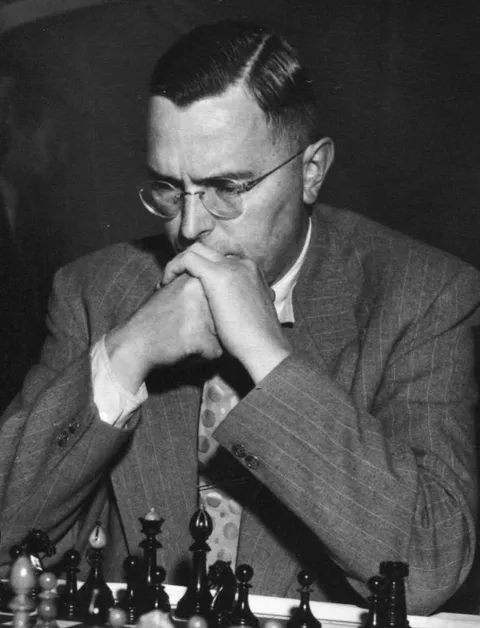
Fifth world chess champion, 1935–1937 Max Euwe (1901–1981). Born in 1901 near Amsterdam. By winning the match against Alekhine in 1935 he became the fifth world champion. Two years later he lost the title back to Alekhine in the return match. President of FIDE. Doctor of mathematics.
Opinions on Max Euwe's championship may differ, but he won his title in a fair fight. Later, as president of FIDE, he did much to popularise chess.
Mikhail Botvinnik
Mikhail Botvinnik was born on 4 August 1911 in the Finnish town of Kuokkala into a family of dentists. He became the first Soviet world chess champion and was later even called “the patriarch of Soviet chess”. As mentioned above, Alekhine died undefeated, so FIDE decided to organise a match-tournament among the strongest grandmasters of the time. In 1948 the winner of this historic event was Mikhail Moiseyevich Botvinnik, who became the sixth world chess champion.
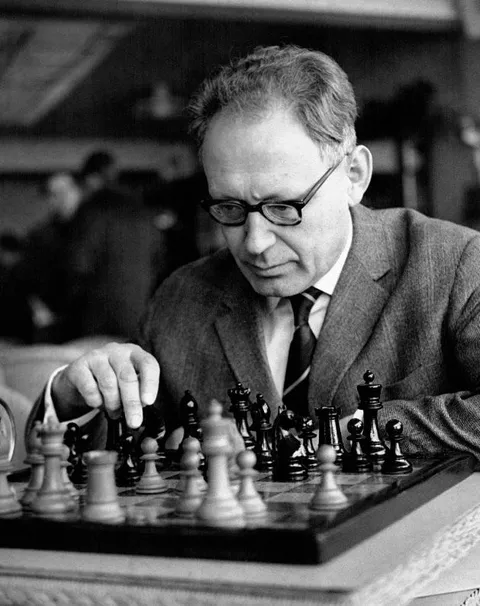
Sixth world chess champion, 1948–1963 Mikhail Botvinnik (1911–1995). Born in 1911 in Kuokkala, Leningrad region (now Repino). The first Soviet world champion. He won the chess crown in 1948 as the winner of a match-tournament of the world's strongest grandmasters and held the title, with two short breaks, until 1963. Professor and doctor of technical sciences.
It can be said that Mikhail Botvinnik was the first to treat chess as a full-fledged profession (although he was also an electrical engineer). He developed special training methods covering both purely chess matters and the player's physical and psychological condition. Botvinnik made a great contribution to chess theory, in particular to openings such as the French Defence, the Queen's Gambit and the Sicilian Defence.
Vasily Smyslov
Vasily Smyslov was born on 24 March 1921 in Moscow. Even at an early age he stood out among his peers for his chess successes, but his main victories came after the war. From 1946 Smyslov was considered Mikhail Botvinnik's main rival, and he eventually played three world championship matches against him. The first, in 1954, ended in a draw, but in the second Vasily Vasilyevich overcame his formidable opponent and became the next world champion. Only a year later, however, Botvinnik regained the crown in the return match.
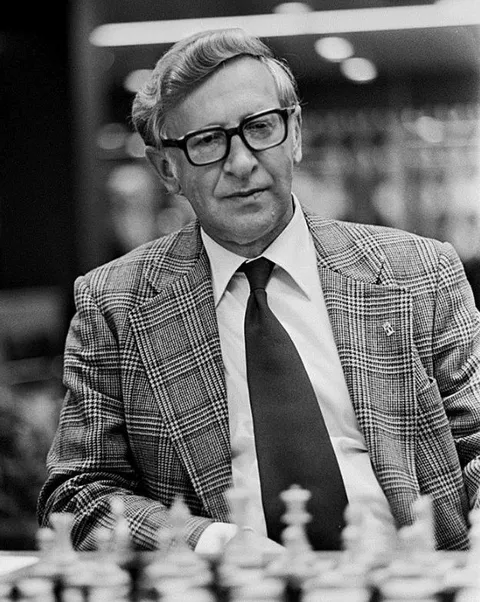
Seventh world chess champion, 1957–1958 Vasily Smyslov (1921–2010). Born in 1921 in Moscow. He met M. Botvinnik three times in matches for the chess crown. In 1957 he won and earned the title of the strongest player on the planet; a year later he lost the return match.
Vasily Smyslov made a great contribution to the theory of the Ruy Lopez, the Slav Defence, the Queen's Gambit, the Grünfeld Defence and others. He himself believed, though, that a chess player should above all improve not in the opening or the middlegame, but in the endgame.
Mikhail Tal
Mikhail Tal was born in Riga on 9 November 1936. His path to the highest chess achievements was the fastest in history. In 1957–58 he twice became USSR champion, then won the Interzonal in Portorož and, a year later, the Candidates tournament. In 1960 Mikhail Tal beat Botvinnik in the title match and at 23 became the youngest holder of chess's main title up to that time. A year later, however, Mikhail Botvinnik took convincing revenge, and Tal became the youngest ex-world champion.
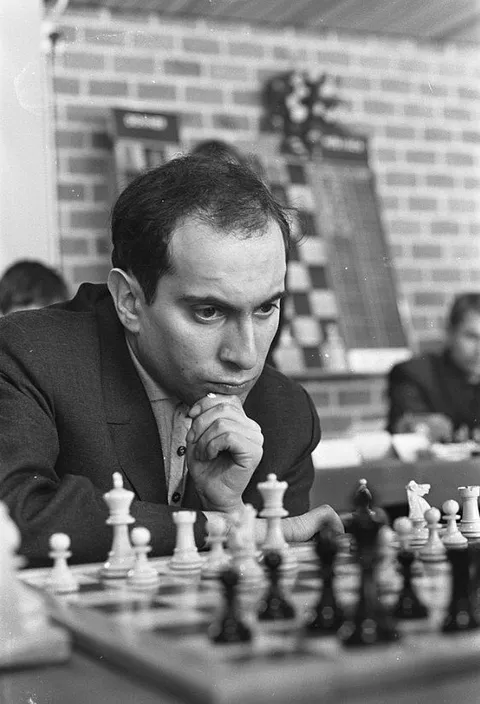
Eighth world chess champion, 1960–1961 Mikhail Tal (1936–1992). Born in 1936 in Riga. At the time the youngest world champion in chess history, he won the title at the age of 23 by defeating M. Botvinnik in 1960. A year later he lost the return match.
Mikhail Tal favoured an attacking, combinative style. His games are full of all kinds of sacrifices and tactical complications. This style greatly appealed to spectators, and Tal was, without exaggeration, everyone's favourite.
Tigran Petrosian
Tigran Petrosian was born on 17 June 1929 in Tbilisi. From the early 1950s he belonged to the chess elite, but his rather cautious style (compared, say, with Tal's) did not let him take first place in Candidates tournaments. Finally, in faraway Curaçao, Tigran Petrosian surpassed all his rivals and earned a match with Botvinnik. The world championship match was even at first, but towards the end the young challenger convincingly proved his superiority.
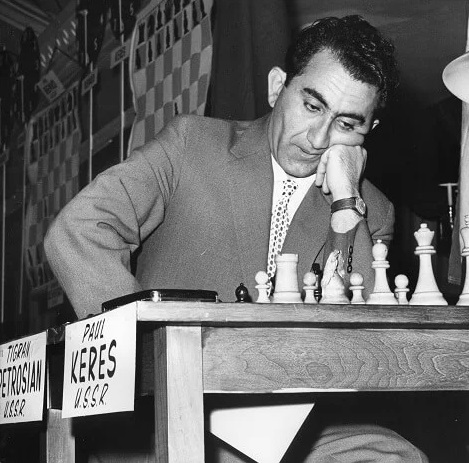
Ninth world chess champion, 1963–1969 Tigran Petrosian (1929–1984). Born in 1929 in Tbilisi. In 1963 he defeated M. Botvinnik and held the chess crown for six years. Candidate of philosophical sciences.
Tigran Petrosian's style was built on the deep positional foundation formulated by the famous theorist Aron Nimzowitsch. Capablanca's games also had a great influence on him. But the ninth world champion went even further and raised the art of prophylaxis in chess to the highest level. He also began to use positional exchange sacrifices in his games, which became his speciality.
Boris Spassky
Boris Spassky was born on 30 January 1937 in Leningrad. By the standards of his time he reached the elite level very early: at 19 he qualified for the Candidates tournament. Like Petrosian, though, for a long time he could not take the last decisive step to a world championship match. Finally, in 1969, Spassky fulfilled his dream and wrote his name into chess history forever.
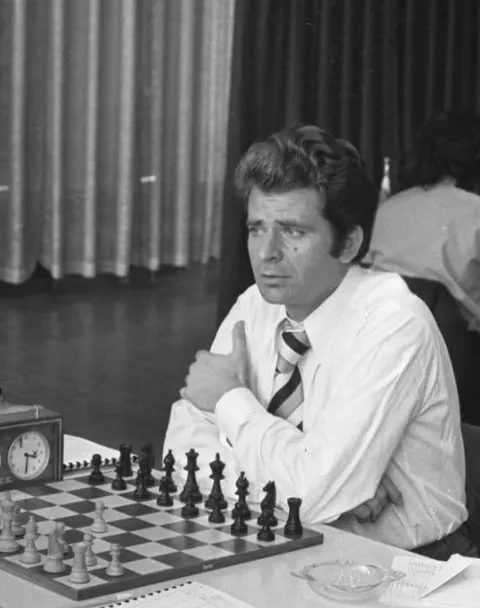
Tenth world chess champion, 1969–1972 Boris Spassky was born in 1937 in Leningrad. At 18 he became world junior champion. In 1969, by defeating T. Petrosian in a match, he won the title of the world's strongest player and held it until 1972.
The tenth world champion's style was universal. He was equally good in defence and attack, in the middlegame and in the endgame. In his best years Spassky always kept his composure at the board and knew how to exploit his opponents' psychological weaknesses. His long-time coach, Igor Zakharovich Bondarevsky, helped him greatly in this.
Robert Fischer
Robert Fischer was born on 9 March 1943 in Chicago. Fischer showed his chess talent early and became a true child prodigy. At 14 he won the adult US championship, and a year later he was a grandmaster — the youngest in history at the time. A year after that Fischer played in the Candidates tournament but failed there; three years later history repeated itself. The American stepped away from chess for a while but returned in 1970. Fischer won almost every tournament he played in and, to crown it all, the world championship match against Boris Spassky. Unfortunately, after that the American grandmaster decided to leave the chess world again.
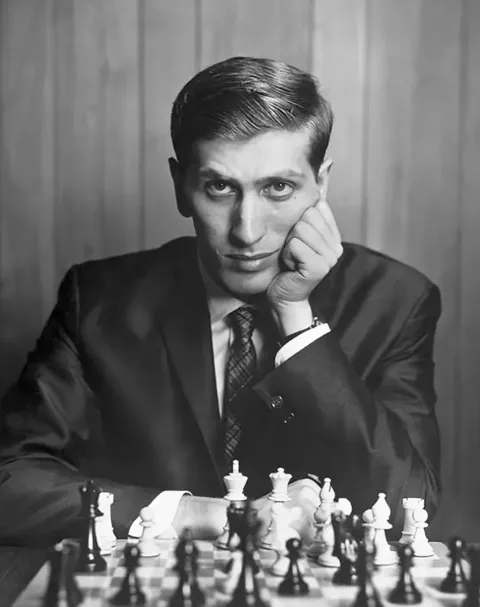
Eleventh world chess champion, 1972–1975 Robert Fischer (1943–2008). Born in 1943 in Chicago. At 15 he received the title of International Grandmaster. Multiple US champion. In 1972 he became world champion by defeating B. Spassky in a match.
Talent, capacity for work and exceptional devotion to chess were Robert Fischer's hallmarks. Thanks to them the American developed a crystal-clear style, winning even in positions with a slight advantage. At the same time he could attack brilliantly, and his games include many piece sacrifices. Fischer did a great deal to popularise chess: thanks to his efforts, tournament prizes and playing conditions improved.
Anatoly Karpov
Anatoly Karpov was born on 23 May 1951 in Zlatoust, Chelyabinsk region. By the early 1970s Karpov had many tournament wins to his credit but was not yet regarded as a real rival to Spassky and Fischer. Before the 1973 Interzonal he even admitted that this was not yet his cycle. Fate decided otherwise: Karpov made it to the Candidates matches and then beat the whole elite of Soviet chess in turn — Polugaevsky, Spassky and Korchnoi. Ahead lay a match with Fischer, but the American champion refused to play.
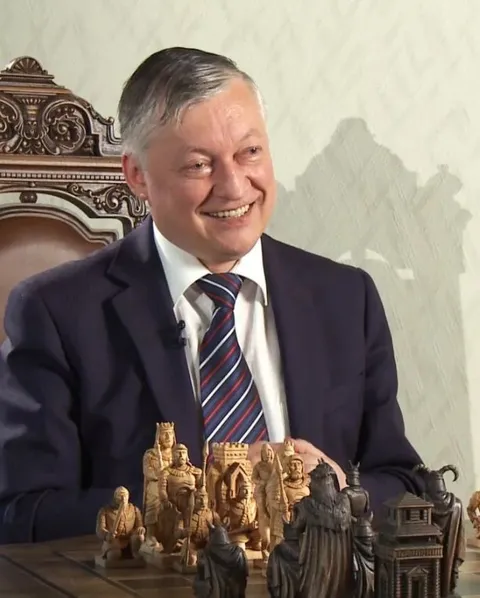
Twelfth world chess champion, 1975–1985 Anatoly Karpov was born in 1951 in Zlatoust. At 18 he became world junior champion. Winner of many major international competitions. By 1981 he had become world champion three times.
Karpov is distinguished by outstanding mastery of positional manoeuvring and a pragmatic approach to the game. He is one of the most decorated players in history: six Chess Olympiad victories with the USSR team, nine chess “Oscars”, three Soviet championships and four European championships.
Garry Kasparov
Garry Kasparov was born in Baku on 13 April 1963. His path to the highest chess title was swift. In 1981 he became the youngest USSR champion, then won the Interzonal convincingly. In the Candidates matches Kasparov beat Beliavsky, Korchnoi and Smyslov in turn. His first title match with Karpov began badly — he was losing 0:5 — but then he managed to win three games. The match dragged on so long that it was decided to hold a new one, and in 1985 Garry Kasparov became the youngest world champion in chess history.
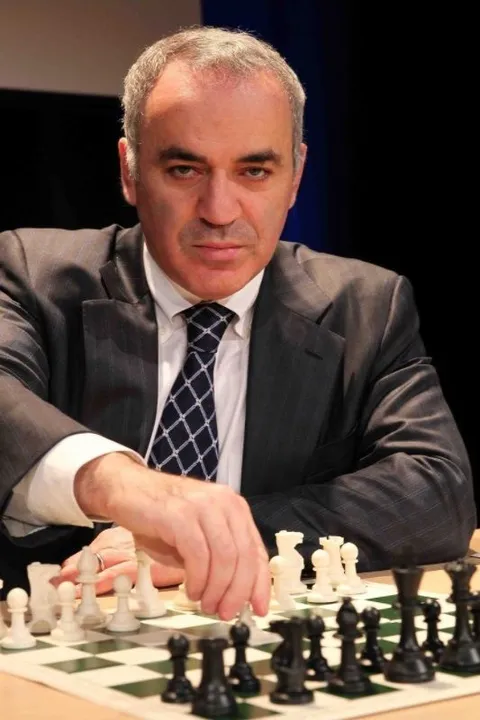
Thirteenth world chess champion, 1985–2000 Garry Kasparov was born in Baku on 13 April 1963. From the age of 10 he was coached by master Nikitin; at 12 he became USSR junior champion. On 10 November 1985 Kasparov won the match against Karpov (a very long contest that had begun on 10 September 1984 and was then halted) and became the youngest world chess champion.
Kasparov is known for an aggressive, combinative style and precise calculation of variations. He was one of the first to realise the importance of computers for opening preparation and game analysis. That is one reason why he managed to stay at the top of the FIDE rating list for so long and to fight successfully against younger rivals. Today Kasparov occasionally plays in exhibition events but mainly devotes himself to public and political activity.
Vladimir Kramnik
Vladimir Kramnik was born on 25 June 1975 in Tuapse. At just 17 he won the Chess Olympiad with the Russian team. In 2000 Kramnik rather unexpectedly beat Garry Kasparov and took the title. Unfortunately, a return match between the two never took place. Kramnik then defended his title twice, in matches with Péter Lékó and Veselin Topalov.
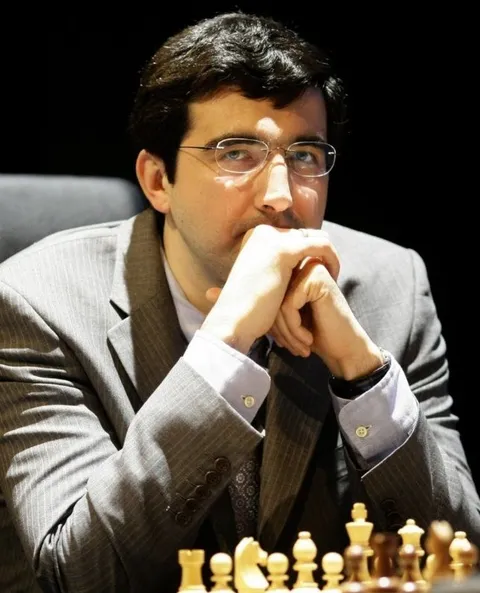
Fourteenth world chess champion, 2000–2007 Vladimir Kramnik was born on 25 June 1975 in Tuapse, Krasnodar Krai. He won world youth championships at 16 and 18. International Grandmaster. In 2000 he became world champion by beating Kasparov, then defended the title against Lékó in 2004 and Topalov in 2006.
Most experts describe Kramnik's style as pragmatic and tenacious, comparing it with Anatoly Karpov's. In the 2010s, however, Vladimir noticeably widened his arsenal, more often going for combinative attacks and piece sacrifices. During his active career Kramnik was also a great expert in opening theory. Today he often trains young players and helps to popularise chess.
Viswanathan Anand
Viswanathan Anand was born on 11 December 1969 in Madras, India. Until the early 1990s players from India had never achieved major successes, so Anand's arrival in the chess elite was rather unexpected. Thanks to his enormous talent, however, he quickly reached the very top. In 1995 the Indian reached a title match but lost to Kasparov. Then came a defeat by Karpov in a similar match, this time in the FIDE version. In 2007 the world championship was held as a double round-robin super-tournament of category XXI. Anand won it and became the new king of chess. A year later he defended his title in a match against Vladimir Kramnik, and after that he won two more title matches — against Veselin Topalov and Boris Gelfand.
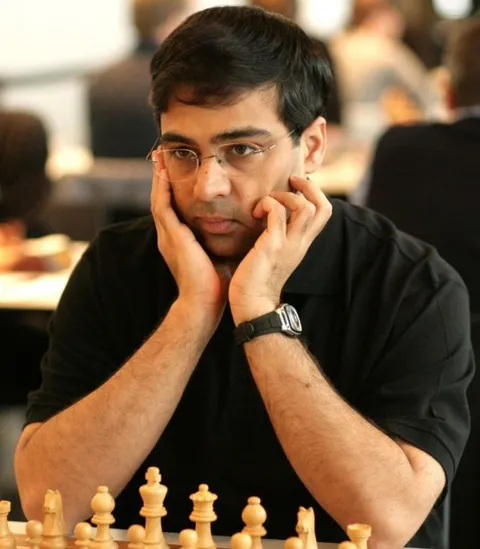
Fifteenth world chess champion, 2007–2013 Viswanathan Anand was born on 11 December 1969 in Madras, India. Anand began playing chess at 6, and, interestingly, his first teacher was his mother. At 14 he won the Indian junior championship and at 16 became Indian champion. After winning the world junior championship he became India's first International Grandmaster, and after this remarkable victory chess became popular in India once again.
Anand's style can well be called universal. He has brilliant intuition and an innate sense of chess logic, which allow him to avoid serious mistakes and keep control of the situation on the board. Anand is also known for deep opening preparation and excellent skill in defending difficult positions.
Magnus Carlsen
Magnus Carlsen was born on 30 November 1990 in the Norwegian town of Tønsberg. He is one of the youngest grandmasters in the world: he made the norm on 26 April 2004 at the age of 13 years, 4 months and 27 days. At 17 Carlsen topped the FIDE rating list, and in 2013 he became world champion by defeating Viswanathan Anand. In May 2014 the Norwegian reached his all-time peak rating of 2882 points — a sky-high figure that is unlikely to be matched by any other grandmaster in the foreseeable future. He also set a record unbeaten streak in classical chess that lasted about two years.
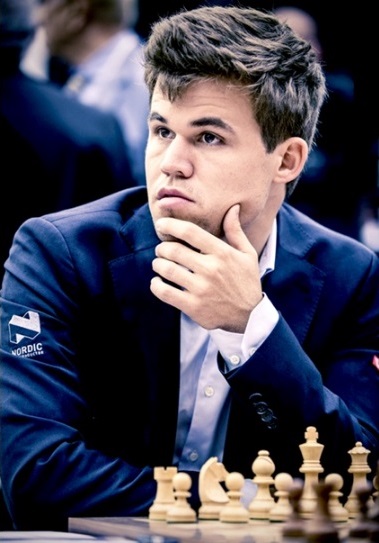
Sixteenth world chess champion, 2013–2023 Magnus Carlsen is a Norwegian grandmaster with the highest rating in chess history (2882). On 22 November 2013 he became the new world champion, beating Viswanathan Anand 6.5–3.5 in a match held in India.
Carlsen defended the title four times (in 2014, 2016, 2018 and 2021) and in 2023 declined to play another match. Magnus Carlsen is not only one of the strongest players in history but a whole brand. He regularly appears in lists of the world's most influential people. The Norwegian is also known for modelling for the Dutch fashion brand G-Star. Magnus takes part in many popular TV shows and readily gives interviews. The very popular mobile app “Play Magnus” operates under the world champion's brand, and he also owned the major chess website chess24.
Ding Liren
Ding Liren was born on 24 October 1992 in Wenzhou (China). He won the Chinese championship three times and in 2017–2018 played 100 games in a row without a loss in top-level events. In 2022 he took second place in the Candidates tournament.
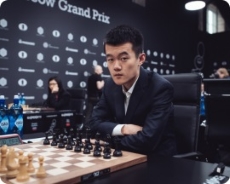
Seventeenth world chess champion, 2023–2024 After Magnus Carlsen declined to defend his title, the 2023 world championship match in Astana was played between the winner and the runner-up of the Candidates tournament — Ian Nepomniachtchi and Ding Liren. The classical part ended in a 7:7 draw, and Ding won the rapid tie-break, becoming the first men's world champion from China.
In December 2024 in Singapore Ding Liren defended his title against Gukesh Dommaraju. The match was evenly balanced until the last, fourteenth game, in which Ding made a mistake in the endgame and lost the title 6½:7½.
Gukesh Dommaraju
Gukesh Dommaraju was born on 29 May 2006 in Chennai (India), the city where the fifteenth world champion Viswanathan Anand also grew up. He earned the grandmaster title at the age of 12 years, 7 months and 17 days — just 17 days short of Sergey Karjakin's record.
Eighteenth world chess champion (since 2024) In April 2024, aged 17, Gukesh won the Candidates tournament in Toronto, becoming its youngest winner in history. That autumn, with the Indian team, he won gold at the Chess Olympiad in Budapest, posting the best result on board one. In December 2024 he beat Ding Liren 7½:6½ and at 18 became the youngest world champion in history.